


In case you’ve not yet seen it come across your Facebook feed, there’s a new Narnia movie coming out soon. And the internet has…opinions.
The hubbub started back in September, when Netflix confirmed that Meryl Streep will voice Aslan in Greta Gerwig's The Magician's Nephew, and the verdicts came down within days: blasphemous, they said, a deliberate mockery of Christianity, "creative vandalism" in the words of a pastor from Waxahachie, Texas. One columnist announced that Gerwig had turned Aslan transgender, and his evidence was a promotional photo in which the lion's whiskers struck him as suspiciously colorful. Another commenter pronounced the movie dead on arrival.
All of this over a voice.
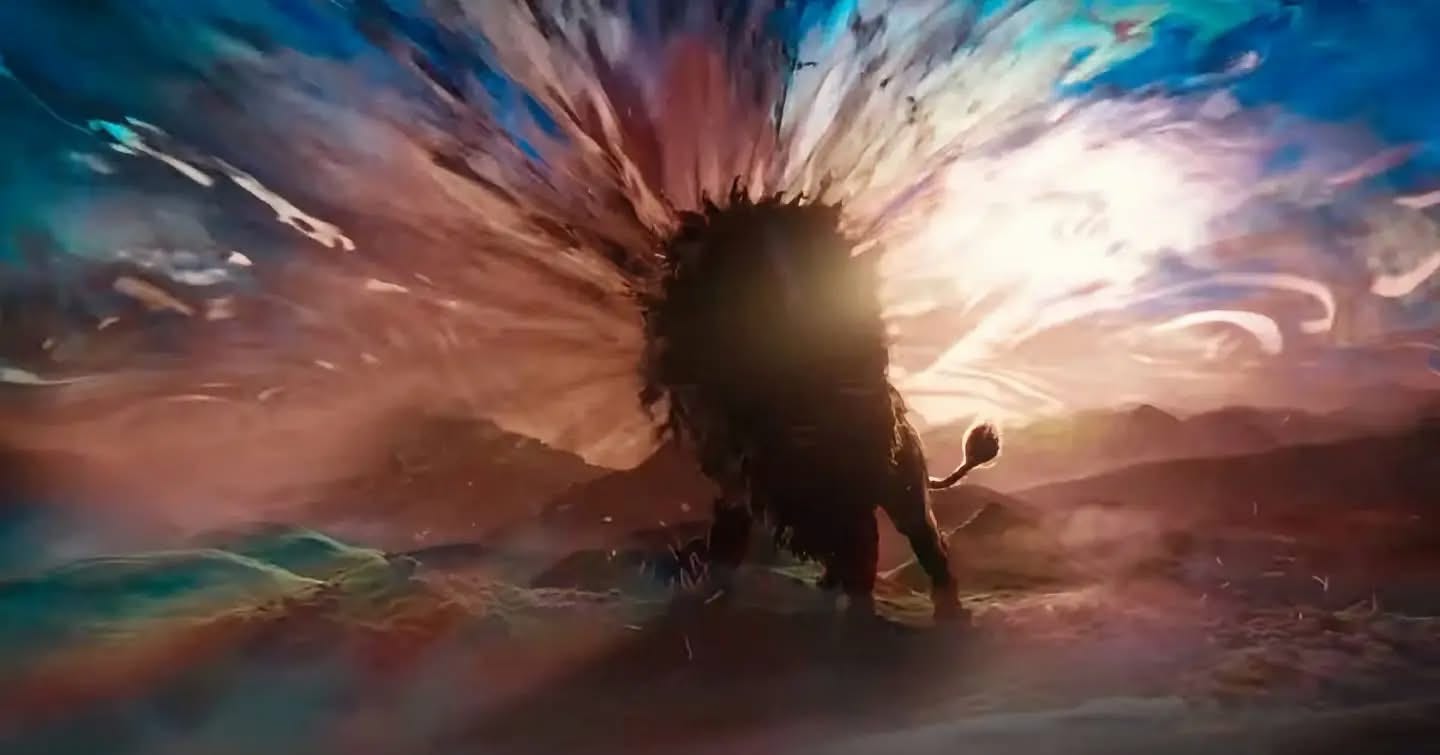
And it is, so far, just a voice. The first trailer landed this week, and there stands Aslan singing Narnia into being, mane and all (a pretty solid indication the character will indeed stay male, since lionesses don't have one of those). Early reporting out of Empire also confirms the character remains a he. For her part, Gerwig says she simply wanted an actor who was "profound but not pretentious," someone past seventy who carried the wisdom of long experience and had somehow kept a child's capacity for wonder. That doesn’t sound like a manifesto. That's a director describing what she hears when she reads the book.
The people upset about this casting have, in their minds, a very good reason to be. Recast someone like Iron Man and you’ll no doubt annoy some fans; recast Aslan and, for a certain kind of reader, you've laid hands on something sacred. Narnia author C.S. Lewis wrote, in letters to his child readers, that Aslan grew out of a supposal: suppose there were a world like Narnia, and suppose the Son of God entered that world as he entered ours, what might he look like there? For millions of readers, that lion was their first brush with a holiness that felt wild and good at the same time. When something has carried God to you, you guard it. I can understand that. I'd even call it love.
But this anger took a particular shape, and the shape gives the game away. No one is pretending Streep can't act; you'd be laughed out of the room for trying. The objection is that she's a woman, and that a woman's voice coming out of that golden face would falsify something about God. Underneath all the social media posts about fidelity to Lewis sits a quieter claim that rarely gets said out loud: we know what God sounds like. Deep. Male. Preferably with Liam Neeson's rumble in it, given he already held the job for three prior films.
The people upset about this movie aren’t villains. Many were formed in churches where faith meant certainty and doubt signaled weakness, where loving God required defending a fixed picture of him against every challenge. If that's your formation, a casting announcement really can feel like an assault on heaven. They were handed a brittle faith and told it was the strong kind, and brittle things learn to guard themselves.
The strangest thing about the outrage, though, is that the author it claims to defend kept warning against exactly this. Lewis resisted calling Narnia an allegory, where every element maps neatly onto doctrine; he preferred his own word, supposal, which leaves room for surprise. And inside the books, Aslan refuses to hold still. Mr. Beaver warns the children before they ever meet him that he isn't safe, though he's good. The line that runs through the series like a heartbeat insists he's not a tame lion. At the end of The Voyage of the Dawn Treader, Aslan doesn't even stay a lion; he appears to the children as a lamb, speaking in what Lewis describes as a "sweet milky voice," before flashing back into his tawny self. Kat Coffin, a Lewis scholar, points to that scene and names it plainly: a feminine presentation of the Christ figure, written by Lewis himself, on purpose.
Lewis went further in his own life. After his wife died, he wrote in A Grief Observed that his idea of God was not God and would have to be shattered time after time, with God himself doing the shattering. "He is the great iconoclast." The man built sacred images for a living and spent his grief begging us not to worship them.
One Lutheran podcaster reached for the final Narnia book, The Last Battle, as proof that Lewis would have hated all this, since that book turns on a counterfeit Aslan. It's certainly a strange text to enlist. The false Aslan there is a donkey draped in a lion skin, stage-managed by an ape who wants to control what Narnia believes, and the horror of the novel is how many creatures follow him precisely because they're so certain they know what Aslan's authority looks like. Lewis aimed that warning at people who wield Aslan's name for power, which is a different group entirely.
As for fidelity, the people charged with guarding Lewis's legacy have already spoken. The C.S. Lewis Company, which holds his rights and is producing the film, praised how deeply Gerwig has embraced his world. The family of Joy Davidman, Lewis's wife, visited the set and came away moved by her sincere passion for the story. You're free to decide the estate has misjudged her. But at that point you aren't defending Lewis anymore, only your memory of Liam Neeson.
Christin Ditchfield Lazo, who has written books on Lewis and urged Christians to wait for the actual film, named the distinction this whole controversy keeps skipping: a woman voicing a male character and a filmmaker rewriting his gender are two different things. Actors have crossed the gender line for as long as there have been stages. I've personally spent thirty years acting, and casting has never worked the way the panic imagines; a role is an interpretation, and a voice is an instrument. Women played Peter Pan for a century, and a woman has voiced Bart Simpson since 1989. Nobody's childhood collapsed.
If the uproar depends on knowing what God sounds like, scripture turns out to be remarkably unhelpful to the cause. When Moses asks for a name at the burning bush, he gets ehyeh asher ehyeh, I AM WHO I AM, which is less a name than a refusal to be filed. The second commandment forbids images of God, a ban aimed at the human habit of freezing the living God into something we can manage. When Job finally gets his hearing, he receives no explanation at all, only a whirlwind full of questions about sea gates and storehouses of snow, and the man who demanded answers ends with his hand over his mouth. Isaiah records God saying it outright: my thoughts are not your thoughts.
Even the one scene where scripture tries to describe God's voice directly refuses to cooperate. Elijah waits on the mountain through wind that splits rocks, then earthquake, then fire, and the text says God was in none of them. What comes after is qol demamah daqqah, a phrase translators have wrestled with for centuries: a still small voice, a gentle whisper, a sound of thin silence. Whatever Elijah heard, it wasn't the register anyone expected, and the Hebrew strains to say it at all.
The Bible's imagery runs far wider than our casting instincts. Moses sings of the God who gave Israel birth. Isaiah hears God cry out like a woman in labor, then promise comfort the way a mother comforts her child. Hosea pictures God as a mother bear robbed of her cubs, which is nobody's idea of a tame image. Jesus looks out over Jerusalem and longs to gather the city the way a hen gathers her chicks under her wings. None of this imagery makes God female, any more than the hen makes God poultry. It makes God free. If a she-bear and a hen can carry the weight of divine fury and divine tenderness in the pages of scripture itself, the lion will survive Meryl Streep.
But all of this uproar rests on a question the angriest posts assume without ever arguing: does God have a gender? The founder of Movieguide said that putting a woman's voice in Aslan's mouth strikes at Christian teaching about who God is, and plenty of commenters agreed, since Jesus came as a man. But classical doctrine cuts the other way. God is spirit, Jesus told the woman at the well, and the church has insisted for two millennia that God, in the divine nature, has no body, which means no sex. Genesis says male and female together were made in God's image; if divinity were male, half the human race would bear a defective likeness. Gregory of Nazianzus was already laughing at this confusion in the fourth century, reminding his hearers that calling God Father names a relationship, not an anatomy. Even the Catholic catechism states it flatly: God is neither man nor woman. And the incarnation doesn't rescue the claim. Jesus was male the way he was Jewish and Galilean and a carpenter's son, the particulars of one real human life, and the church never taught that his maleness was what saved us. The same Gregory gave us the rule: what he did not assume, he did not heal. And He assumed humanity. All of it.
The danger of assigning God a gender runs deeper than getting the doctrine wrong. Mary Daly, no friend of the church she left, put it in nine words Christians have never fully answered: "if God is male, then the male is God." Freeze the divine image into maleness and maleness starts to glow with divinity. The church has centuries of receipts for what follows: authority reserved for men as though it descended with the Y chromosome, women's voices ruled unfit for holy words, and now, in miniature, a mob insisting the one thing God's stand-in cannot sound like is somebody's mother. A graven image doesn't have to be carved from wood or poured from gold. Grammar will do. The danger was never the pronoun; scripture uses it, Jesus taught it, and I'll personally keep praying Our Father without apology. The danger is forgetting the pronoun is borrowed, a window to look through, and not a wall to defend.
The old teachers knew all this, and warned against assuming such knowledge of God. Augustine told his congregation, si comprehendis, non est Deus: if you have understood, the thing you've understood is not God. Gregory of Nyssa read the Exodus story and noticed where Moses had to go to meet God, into the thick darkness where sight fails and trust takes over. The church even has a name for this, the apophatic way, theology that advances by confessing what it cannot say. This was never a fringe. It runs from the desert monks through the medieval mystics straight to Lewis and his shattered images.
Some time ago, I — being a fan of aphorisms — wrote this one down: mystery humbles; certainty hardens.
I believe mystery humbles us the way the whirlwind humbled Job, enlarging the world until his categories gave out. What it left him with is harder to say. Job's last words are so strange and compressed that translators still argue over whether he repents, relents, or is simply comforted to be dust. That unresolve is part of the book's power. Whatever met him in that whirlwind, it wasn't information, and it quieted him in a way the text refuses to explain.
Meanwhile, certainty hardens the way it hardened Job's friends. Eliphaz, Bildad, and Zophar had impeccable theology by the standards of their day, and they were so sure of how God works that they spent thirty chapters wounding a grieving man with it. When God finally speaks at the end of the book, the verdict lands on them: you have not spoken rightly of me, as my servant Job has. The man who raged and doubted, who hauled God into court, is the one God defends. That verdict should unsettle us more than it does.
Before anyone points it out: yes, I'm aware I sound fairly certain myself about the dangers of certainty. But conviction was never the target. I'm certain cruelty is wrong. I'm certain that calling a stranger an enemy of the faith over a children's movie is cruelty, and I don't need a committee to confirm it. Objecting to the casting is an entirely different thing. You can sincerely believe Gerwig has gotten Lewis wrong and keep your decency intact. The trouble begins when the verdict gets treated as the end of the story. The mystery we should be exploring is everything that comes after: why a casting announcement lands on someone like an attack, what formed a faith that has to win every argument to feel safe, where the empathy went and who helped it leave, what it might take to unclench. Certainty closes the case, while mystery keeps the file open. Job’s friends had their verdict by the fourth chapter and spent the rest of the book defending it, and not once does it occur to any of them to get curious about the man in front of them. That's what I mean by hardening. It’s not abandoning conviction, but allowing conviction to end the conversation.
You can watch it happening in real time now. A movie still gets read like an enemy communiqué. Whiskers turn into evidence. Strangers are assigned motives, a director's childhood love of a book becomes a plot against the faith, and the word blasphemy, which once meant something, is spent on a casting sheet.
But all of this fury is the gentle version, a rehearsal where nobody's life is on the line yet. The same reflex at full strength adjudicates who belongs. It tells the kid with honest questions that doubt is rebellion, and it rules on whose marriage counts and whose body is a theological problem to be solved. It meets grief the way Eliphaz met Job's, with a lecture on what the sufferer must have done to deserve it. The people handing down these verdicts are rarely monsters. They're the certain, doing what hardened certainty does, experiencing their own hardness as faithfulness. Job's friends have never lacked for heirs.
Now, I'm not writing this from above the fray, and the temptation toward certainty doesn't check denominational ID. Progressives like me can grow every bit as certain of our own moral clarity, so satisfied we're on the right side of an argument that we stop hearing the human being on the other side of it. The ledger of harm isn't balanced; the temptation is universal. Certainty is a pleasure from the inside, whatever theology it wears. I enjoy being sure, and I've defended positions mostly because they were mine. At the time it felt right. The hardness showed later, in how I'd treated the people who disagreed with me. I've come to believe that's the real test of a faith: how it treats the people who complicate its picture of God.
At the end of the day, I don't know what God sounds like. Neither does the pastor in Waxahachie, and neither do you. Every voice we have ever given God is borrowed: a lion's, a lamb's, a whirlwind's, a sound like thin silence. We see through a glass, darkly. We know in part. Paul wrote those lines inside his greatest chapter on love, which suggests he thought humility and love were neighbors.
Which brings me back to the lion. Who knows what a voice like Meryl Streep's will do to a theater full of people? Nobody does, including Gerwig, which is what makes it art instead of an answer key. Maybe a girl somewhere will hear holiness in a voice like her grandmother's and find a door where she'd been shown a wall. Maybe some old saint will flinch at the first word, then catch in that unexpected timbre a note of the God he thought he knew, wilder than the one he'd settled for. Or maybe it will say nothing about God at all and prove only that Meryl Streep is an amazing actress. That's a live possibility, and it would be its own small mercy, a children's movie allowed to be a children's movie.
So what do we do while we wait, between the glass-darkly now and the face-to-face someday? Micah answered that question twenty-seven centuries ago, and the answer hasn't needed an update since: do justice, love mercy, walk humbly with your God. That final clause does the real work in that sentence. The prophet tucked the epistemology into the ethics, an admission built into the command itself that we don't fully know the God we're walking with. Humility about God and kindness toward neighbors arrive in the same breath because they come from the same place.
But if Micah feels too far away, there are nearer prophets. In 1989, two time-traveling slackers from San Dimas, Bill and Ted, compressed the interim ethic into five words: be excellent to each other. That’s a line from a different movie altogether, but it seems right, since a movie started all this. And the truth is, I've sat through sermons with worse theology in them.
Come next February, I'll be sitting in the theater, nachos on my lap and a smile on my face. These books hold a special place in my heart. They’ve been favorites of mine for a long time, I spent months reading them aloud to both of my children when they were little, and The Magician's Nephew has never been filmed before (most of the series hasn't). So this will be a delight on more levels than one, a world I once handed to my kids finally given its own light and sound.
Maybe Gerwig has made something worthy of the books, and maybe she hasn't. Films fail in a hundred ordinary ways that have nothing to do with heresy, and this one will stand or fall like any other. But whatever happens on that screen, the lion was never ours to cast. He was never even ours to imagine correctly.
So hold the image loosely. Love the stories and the God behind them, and leave room to be surprised by both.
In the meantime, be excellent to each other.